
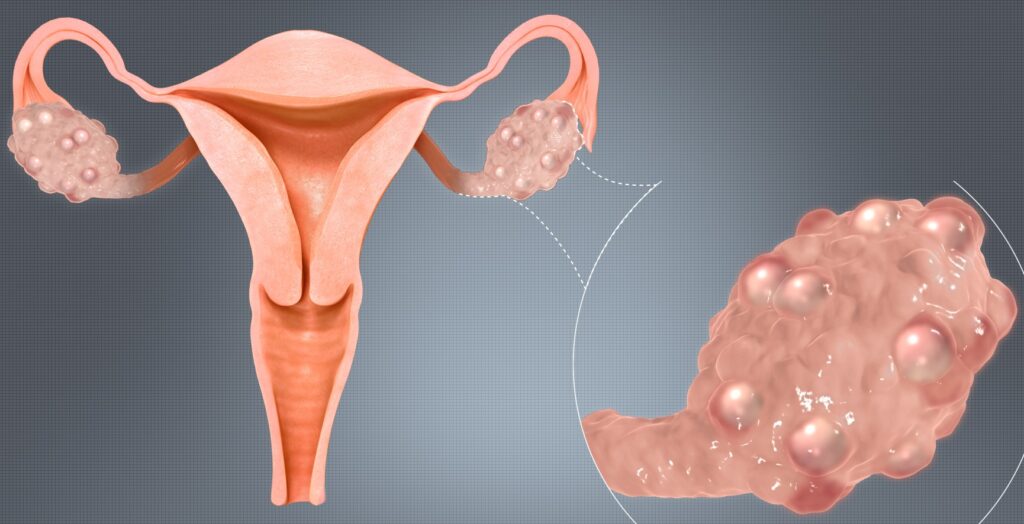
Polycystic Ovary Syndrome (PCOS) is one of the most common hormonal disorders affecting women of reproductive age characterized by:
- Irregular or absent ovulation
- Multiple cysts in the ovaries (though not always)
- Elevated levels of male hormones (androgens)
- Insulin resistance
- Weight gain, especially around the abdomen
- Skin issues like acne, dark patches (acanthosis nigricans), and excessive hair growth (hirsutism)
Its common symptoms are irregular periods, weight gain, acne, infertility, and emotional stress. PCOS can have a significant impact on a woman’s physical and mental health. Conventional medicine often addresses PCOS symptoms with hormonal therapies like birth control pills or insulin-sensitizing drugs which have many side effects. Therefore an increasing number of women are turning towards alternative therapies — particularly homeopathy — a more natural, holistic approach.
The exact cause of PCOS remains unknown, but genetics, lifestyle, and insulin resistance are significant contributing factors. Left untreated, PCOS can lead to complications such as infertility, Type 2 diabetes, heart disease, and even endometrial cancer.
Homeopathy, based on the principle of “like cures like,” stimulates the body’s innate healing ability, treating the root cause of disorders rather than just managing symptoms. In this blog, we’ll explore the role of homeopathy in the management and treatment of PCOS, the common remedies used.
The Homeopathic Approach to PCOS
In homeopathy, treatment is highly individualized. We study the patient’s physical symptoms, mental state, lifestyle, emotions, and even family medical history to select a remedy that matches the individual’s constitution.
Homeopathy treats PCOS by:
- Balancing hormonal levels naturally
- Regulating menstrual cycles
- Managing metabolic disturbances like insulin resistance
- Addressing emotional symptoms such as anxiety, depression, and low self-esteem
- Boosting overall vitality
One of the key strengths of homeopathy is that it works gently without side effects, making it ideal for chronic conditions like PCOS that require long-term care.
Common Homeopathic Remedies for PCOS
Let’s look at some remedies commonly prescribed for PCOS. Remember, self-medication is not advisable. Always consult a qualified homeopath for individualized treatment.
1. Pulsatilla
- Indication: Irregular, scanty, or suppressed periods; delayed puberty; mood swings; a tendency to cry easily.
- Personality Traits: Gentle, emotional, mild-mannered women who seek comfort and reassurance.
- Role in PCOS: Pulsatilla helps in regulating menstrual cycles and balancing hormones.
2. Sepia
- Indication: Irregular or absent periods, infertility, painful periods, a dragging sensation in the pelvis.
- Personality Traits: Indifference to loved ones, irritability, a feeling of being overwhelmed with household responsibilities.
- Role in PCOS: Sepia is excellent for hormonal imbalances and emotional burnout often seen in women with PCOS.
3. Lachesis
- Indication: Suppressed menses, hot flashes, and intolerance to tight clothing.
- Personality Traits: Talkative, intense emotions, jealous tendencies.
- Role in PCOS: Useful in managing hormonal issues and emotional fluctuations.
4. Calcarea Carbonica
- Indication: Obesity, excessive sweating, menstrual irregularities, easy fatigue.
- Personality Traits: Overthinking, anxiety about health, fear of disaster.
- Role in PCOS: Helps in managing weight gain and metabolic dysfunctions associated with PCOS.
5. Natrum Muraticum
- Indication: Irregular periods, infertility, anemia, hair loss, and emotional repression.
- Personality Traits: Reserved, introverted, sensitive to criticism, holds onto grief.
- Role in PCOS: Addresses emotional root causes and physical symptoms like irregular menstruation.
6. Thuja Occidentalis
- Indication: Ovarian cysts, polyps, warts, and other overgrowths.
- Personality Traits: Secretive, feels unworthy, low self-esteem.
- Role in PCOS: Effective in treating cyst formation and improving ovarian health.
How Homeopathy Works for PCOS: A Deeper Insight
Unlike conventional treatments that often use synthetic hormones to “override” the body’s natural processes, homeopathy seeks to rebalance and retrain the hormonal system gently. This means:
- Restoration over Suppression: Homeopathic remedies don’t suppress symptoms but address the imbalances that cause them.
- Boosting the Healing Mechanism: Remedies act as stimuli to the body’s vital force — the innate intelligence that governs healing.
- Addressing Mental-Emotional Health: Since emotional stress can worsen PCOS, homeopathic treatment includes mental well-being as a critical factor.
Advantages of Homeopathic Treatment for PCOS
- No Hormonal Manipulation: Homeopathy helps the body regulate its own hormones without synthetic intervention.
- Minimal to No Side Effects: Remedies are made from natural substances and used in highly diluted forms.
- Holistic Healing: Treats the person as a whole — mind, body, and emotions.
- Improved Fertility: By restoring hormonal balance naturally, homeopathy can boost fertility without the need for invasive treatments.
- Custom-Tailored Treatment: Each remedy is selected based on the individual’s unique symptoms and constitution.
Lifestyle Support Alongside Homeopathic Treatment
While homeopathy can bring profound healing, it works best when combined with healthy lifestyle practices. Here’s what you can do alongside your treatment:
1. Dietary Changes
- Focus on a low-glycemic diet rich in whole grains, lean proteins, fruits, and vegetables.
- Reduce intake of refined sugars, processed foods, and dairy.
- Include anti-inflammatory foods like turmeric, ginger, and omega-3 fatty acids.
2. Exercise
- Engage in moderate exercises like walking, yoga, or Pilates for at least 30 minutes a day.
- Strength training can help improve insulin sensitivity.
3. Stress Management
- Practice meditation, deep breathing, or mindfulness.
- Therapy or counseling can help address deep-seated emotional issues.
4. Sleep Hygiene
- Aim for 7–9 hours of quality sleep each night.
- Poor sleep can exacerbate insulin resistance and hormonal imbalance.